
A Case Study Written for an Award Judge Isn’t Written for You
Case studies written to win an award follow a judging rubric, not a plain results report. Here is how to read that structure and what it usually leaves out.
Case studies written to win an award follow a judging rubric, not a plain results report. Here is how to read that structure and what it usually leaves out.
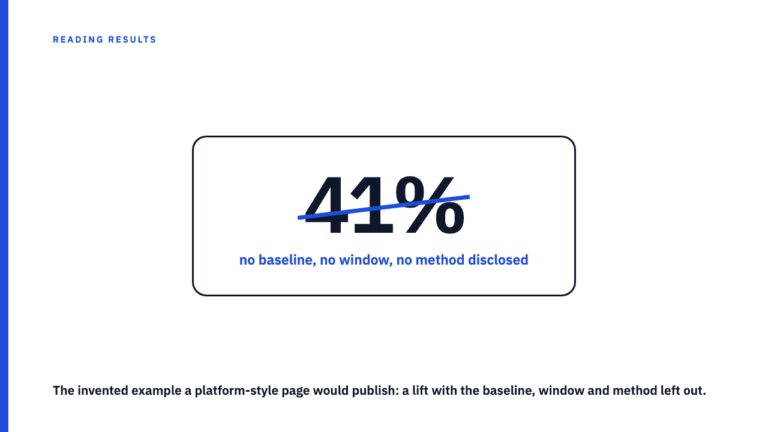
Platform-hosted success stories are written by the team that sells ad inventory. Here is the sharper discount that format actually earns.
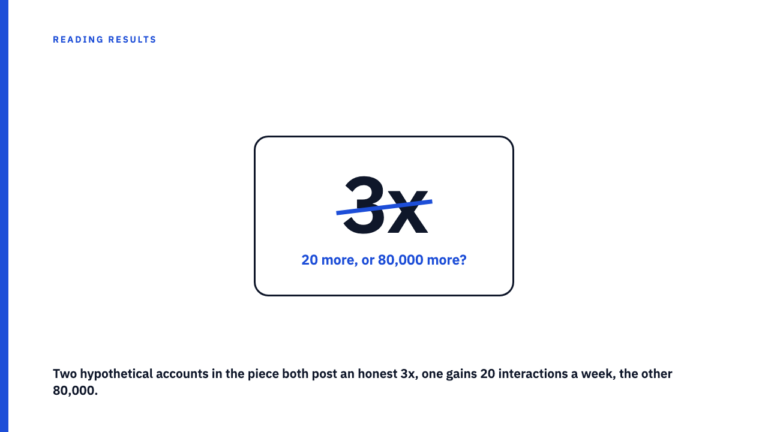
A ‘3x’ or ’10x’ claim is a ratio, not a result. See why multiplier phrasing hides more than a percentage, and the questions that recover the missing numbers.
A before number inflated by bought followers or a giveaway is not a clean baseline. Here is how to spot the contamination before trusting the growth rate.
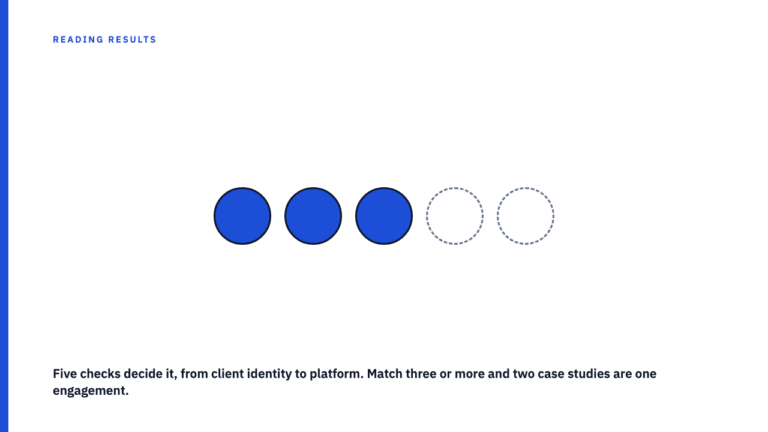
A client win can surface on an agency’s own site, in an awards entry, and in a directory listing. Learn to spot when three studies are one engagement.
A case study can state a sales goal, then close by reporting a follower count instead, with no explanation of how the second number produced the first.
A big all-time number under a named campaign proves nothing about that campaign. Here is how to spot the swap and what a bounded number looks like.
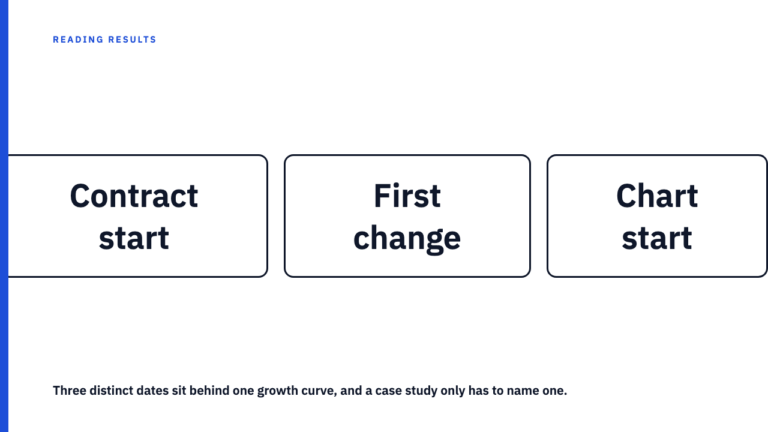
A rising chart in a case study can start climbing before the credited agency’s engagement even began. Here is how to check the start date against the curve.
A vague client description can mean the case study blends several accounts into one number. Here is how to spot a composite and what it cannot tell you.

New or smaller accounts often get an early platform boost toward their first audience, separate from anything the agency did. Here’s how to read that curve.