
A Projected Number Is Not a Reported Result
Learn to spot the verb tense that turns a modeled projection into a claimed result, so you can tell an estimated lifetime value from an actually observed one.

Learn to spot the verb tense that turns a modeled projection into a claimed result, so you can tell an estimated lifetime value from an actually observed one.
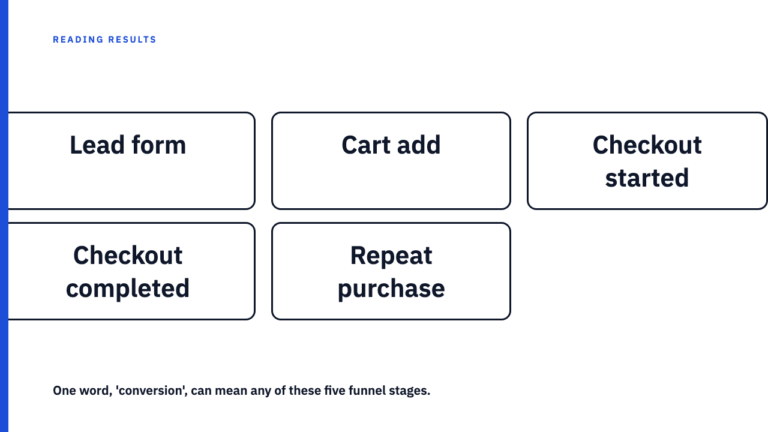
A reported ‘conversion’ could be a lead, a cart add, a checkout start, or a sale. Here is the funnel stage question to ask before you compare two numbers.

A giveaway can grow followers fast, but that’s a different claim from lasting engagement. Here is how to check whether the gain actually held, and why.
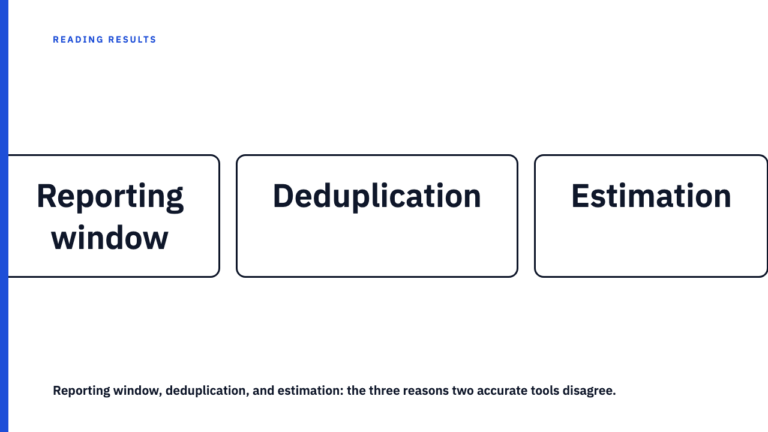
Platform dashboards and third-party analytics tools define the same metric differently. Here is how to spot which one a case study is actually showing you.
Every metric wobbles week to week even with no campaign running. Learn to check a reported lift against that normal range before calling it a real signal.

A single winning case study rarely says how many stores or accounts ran the same play before one got published. Here is exactly how to ask for that number.

A flattering year over year number might just be the category rising, not the campaign. Here is how to net one rate out of the other before you credit it.
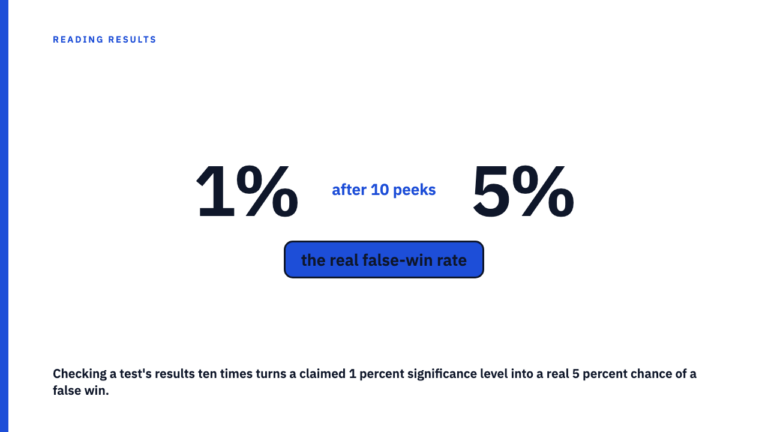
Stopping a test early because a variant looks ahead inflates the win. Here is why early leads shrink, and what a trustworthy stopping rule looks like.

A single channel’s win can be reallocated budget, not new growth. How to check whether total marketing spend actually moved before you believe the case study.
Two metrics rising together in a case study is not proof one caused the other. Here is how to spot the missing mechanism and what questions expose it.