
A Revenue Jump Might Be a Price Hike, Not More Customers
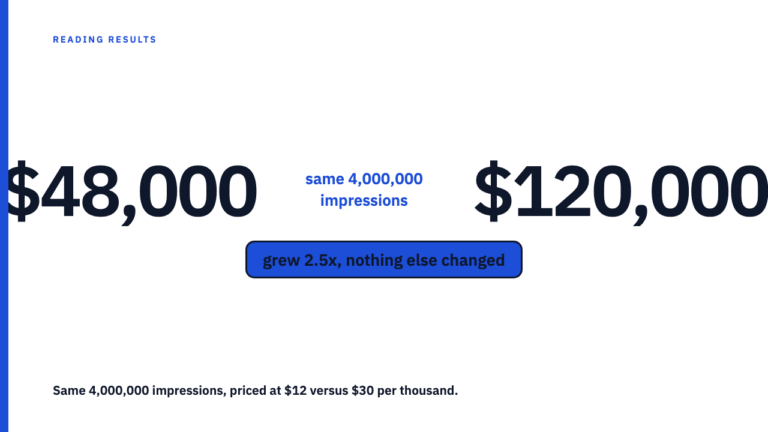
A two year revenue comparison can hide a price increase inside the growth number. Here is how to separate volume growth from price before crediting it.
A two year revenue comparison can hide a price increase inside the growth number. Here is how to separate volume growth from price before crediting it.
Learn why a statistically significant lift in a case study isn’t automatically worth acting on, and how to tell which claim a number is actually making.
Earned media value turns mentions into a dollar figure using a multiplier the agency reporting it chooses itself, and that changes what the number means.
A results period that overlaps a price change or product launch is not a clean campaign result. Here is how to spot the overlap and weigh what it explains.
A lift or total without a stated campaign duration cannot become a rate, so it cannot be compared to anything else. Here is what to check before you trust it.
A case study’s publish date is part of its claim. Here’s what changes on a social platform over years, and how to read an old result honestly before reuse.
A growth number in a case study can rise without a real audience behind it. Here are the checkable tells that separate the two, no accusation required.
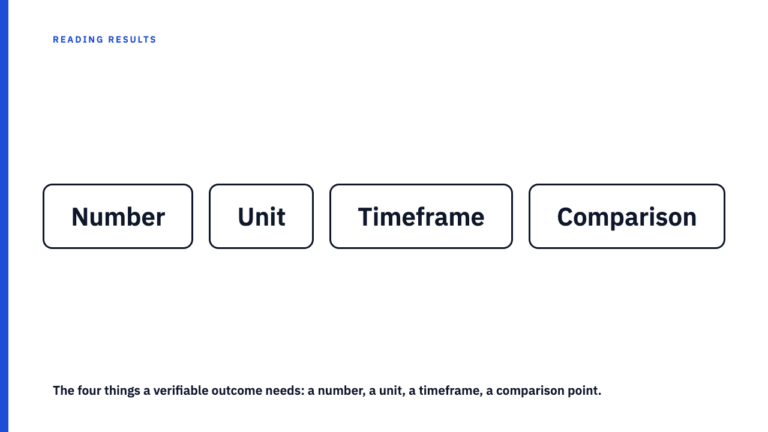
A results-shaped case study with only adjectives in its outcome section is a testimonial, not evidence. Here is the checklist for telling the two apart.
An ads dashboard conversion total can be part measured, part modeled, with no label saying which. Here is how to ask for the split before treating it as fact.
A case study’s opening and closing numbers can share a label while the platform quietly redefined what that label measures. Check the definition’s date first.