
The counterfactual: the number no case study can show you
Every results claim compares the period against what would have happened anyway, a number nobody measured. Grade the substitute the report offers instead.
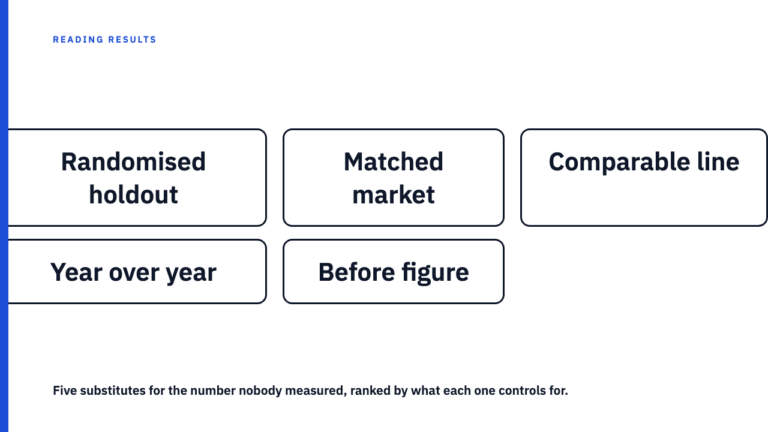
Every results claim compares the period against what would have happened anyway, a number nobody measured. Grade the substitute the report offers instead.
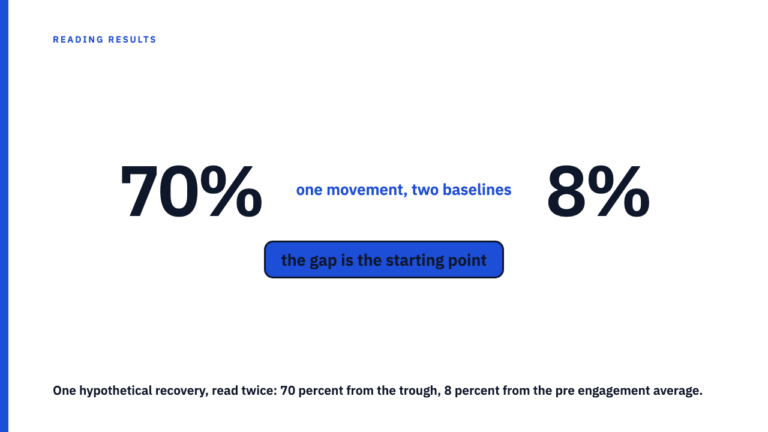
Agencies are usually hired at a low point, and low points partly correct on their own. Learn which share of a reported lift is arithmetic, and how to test it.
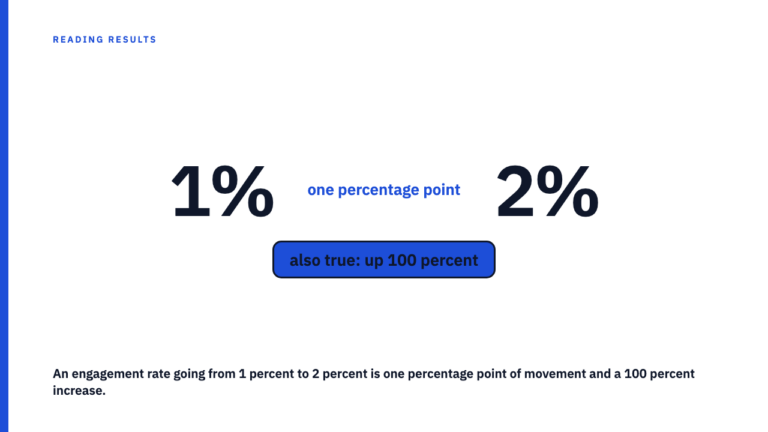
Moving an engagement rate from 1 percent to 2 percent is a one point gain and a 100 percent gain. Here is how to convert every relative claim back to points.
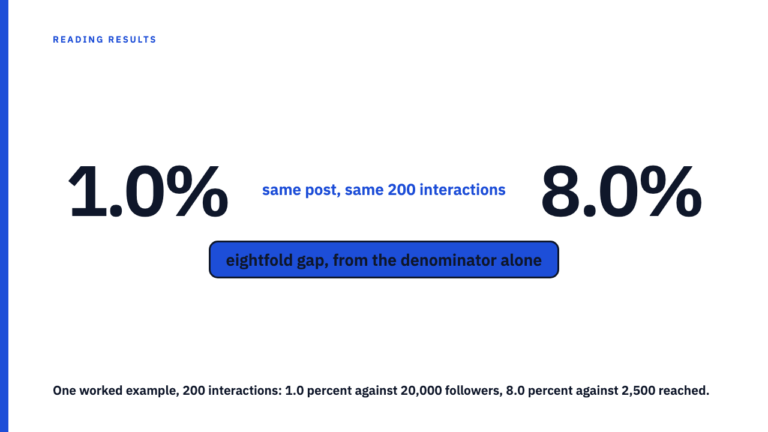
Engagement rate can be measured against followers, reach, or impressions, and the same post scores very differently in each. Ask which one before comparing.
A published case study library is a selected sample, not a random one. Here is what a shelf of wins can prove, what it cannot, and how to read one honestly.
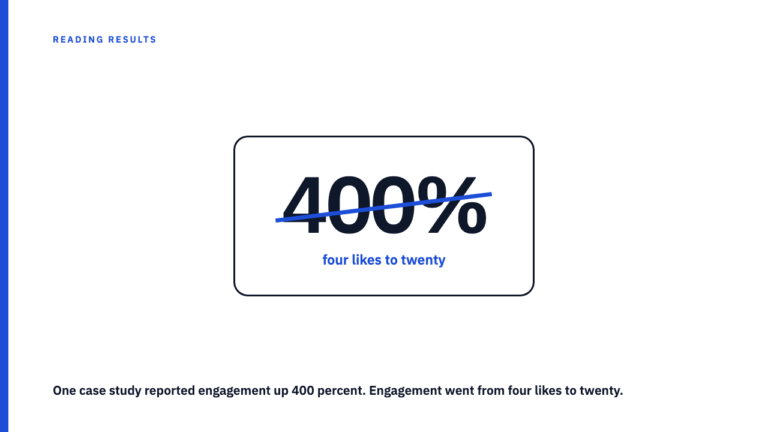
A case study says engagement grew 400 percent. It doesn’t say engagement went from four likes to twenty. Both statements are true. Only one of them tells you anything useful about whether to hire that agency. Reading marketing case studies well means learning to ask what’s missing before you get impressed by what’s shown, because…