
A Cheap Result at Small Budget Won’t Hold at 10x Spend
A great cost per result from a small test says little about what the next dollar buys. Learn to read budget size and marginal return in a case study.
How to interpret social media results and the numbers behind them
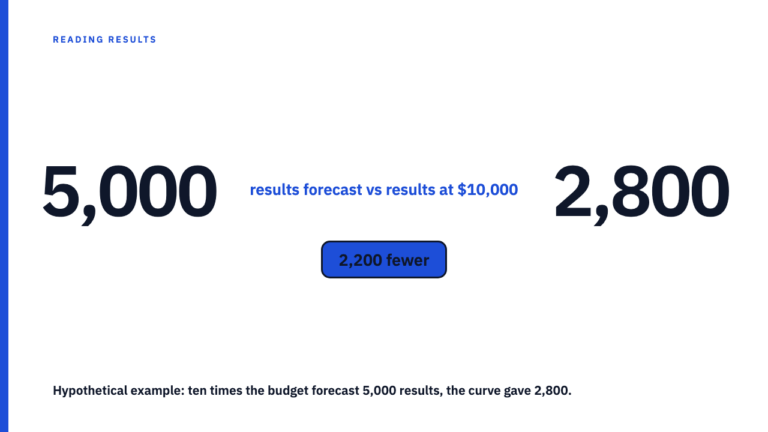
A great cost per result from a small test says little about what the next dollar buys. Learn to read budget size and marginal return in a case study.
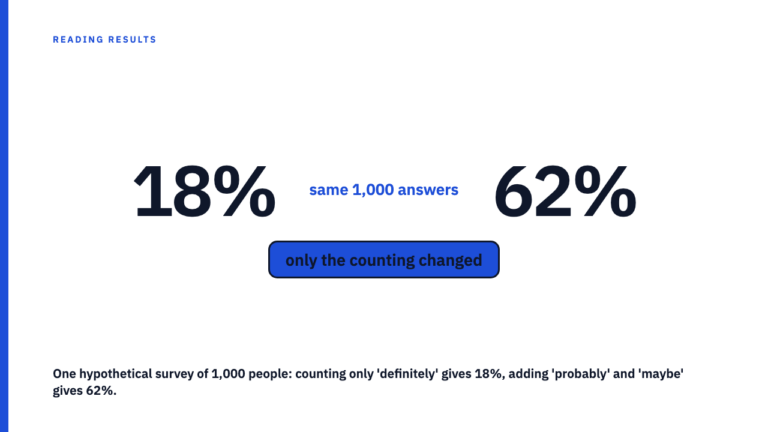
A purchase-intent percentage records what people say they will do, not what they did. See why it runs high and what a case study can fairly claim from it.
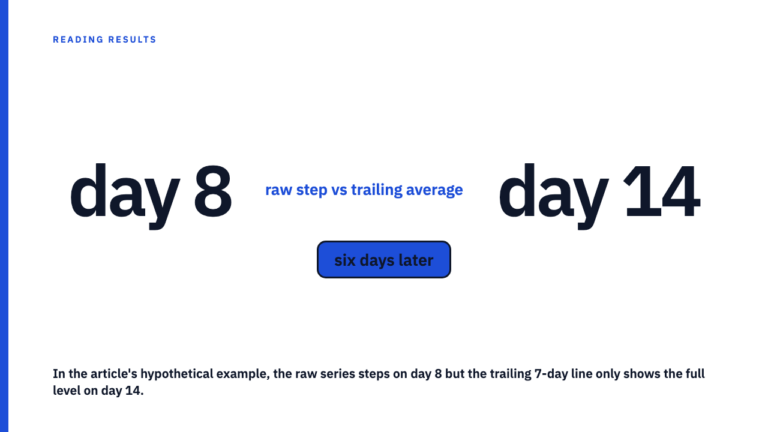
Seven-day averages make a results chart readable, but they shift timing and stretch spikes. Learn what to ask for when the launch date is the argument.
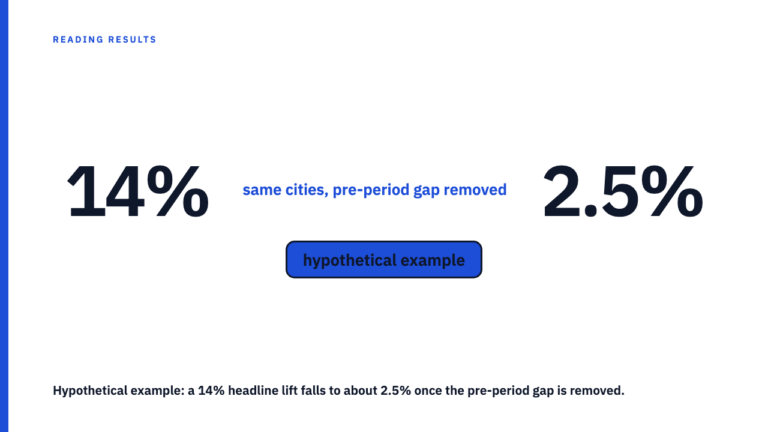
A matched-market lift is only as fair as the comparison cities. Learn to ask for pre-period fit, who chose the controls, and what a poor match looks like.
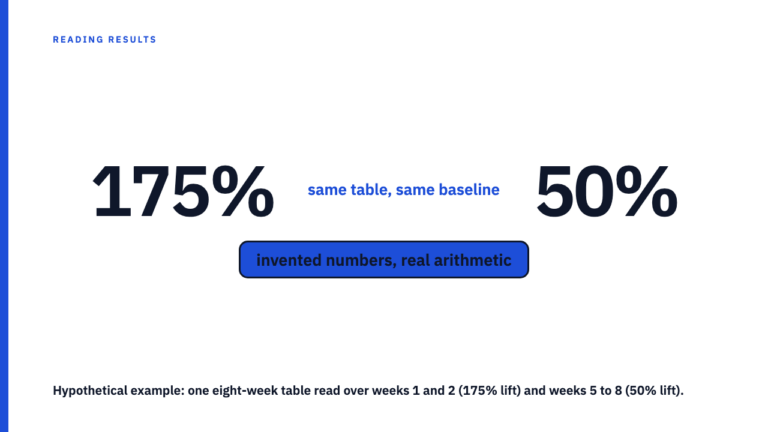
A new format’s launch window often measures curiosity, not the level a client lives with. Learn to spot a decay curve and ask for the late-period figure.
An anonymous client removes your best check on a case study. Here is what stays verifiable, what does not, and how much less weight the claim should carry.
When a case study skips a flat overall result and spotlights one audience, ask whether the cut was declared before launch and how many other cuts were tried.
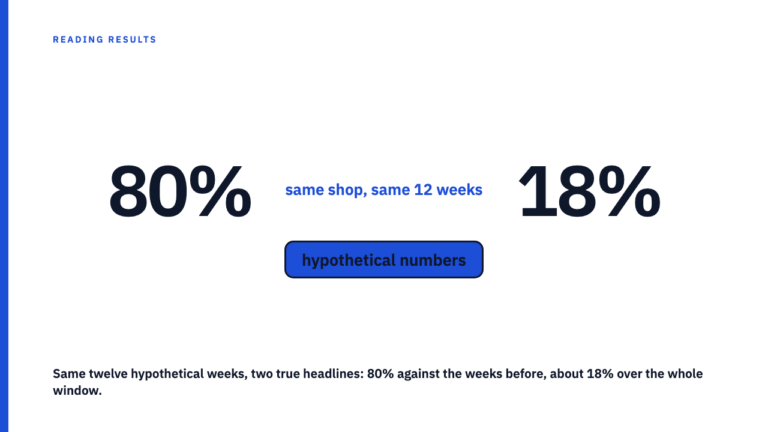
A sales lift during a launch offer may belong to the discount, not the creative. Here is exactly what to ask for and what a fair comparison holds constant.
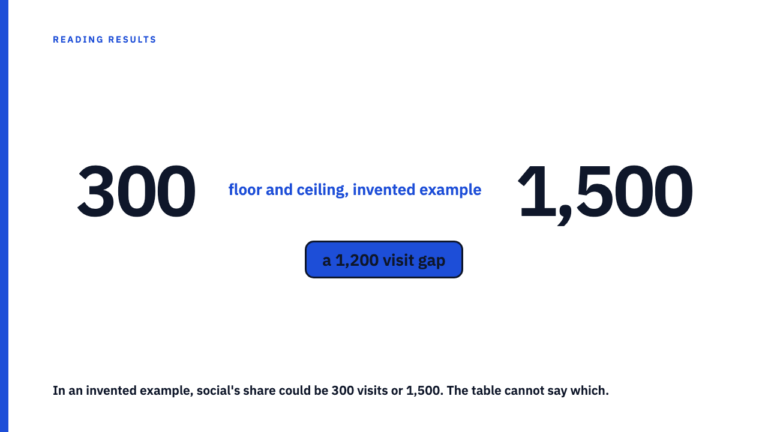
Direct traffic is where unlabelled visits land. Learn what it contains and how to judge a case study that ignores it or claims all of it for social.
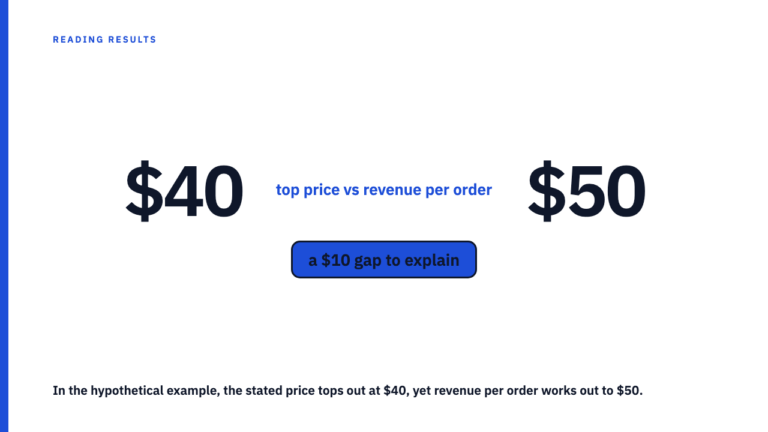
Divide one reported figure by another and a case study often shows what it left out. Three calculator checks, with a fully worked hypothetical example.