
The Social Win That Came Out of Another Channel’s Budget
A single channel’s win can be reallocated budget, not new growth. How to check whether total marketing spend actually moved before you believe the case study.
A single channel’s win can be reallocated budget, not new growth. How to check whether total marketing spend actually moved before you believe the case study.
Two metrics rising together in a case study is not proof one caused the other. Here is how to spot the missing mechanism and what questions expose it.
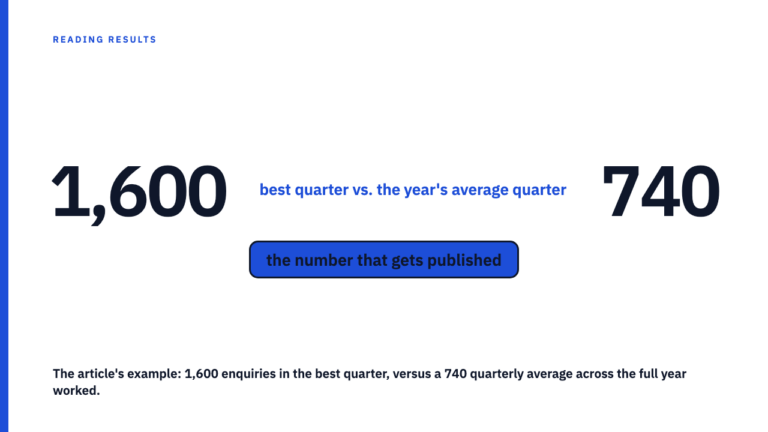
When a case study’s date range is shorter than the campaign it describes, the missing months matter. Here’s how to check what they show before you trust it.
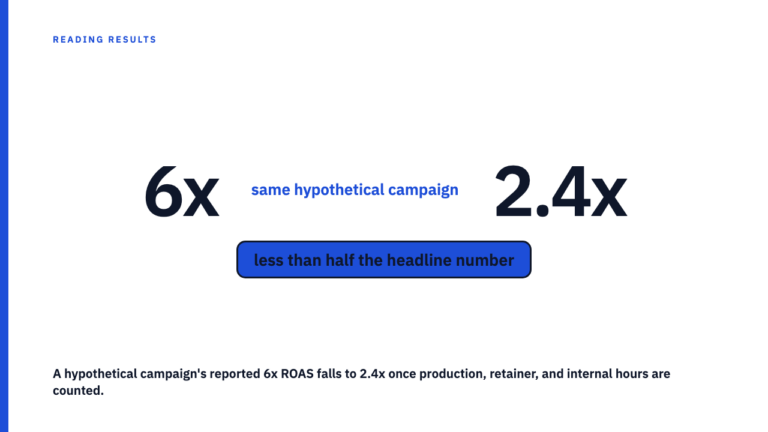
A reported ROI nets ad spend against revenue, but production cost, retainer, and internal hours rarely count against it. Here is how to check what did.
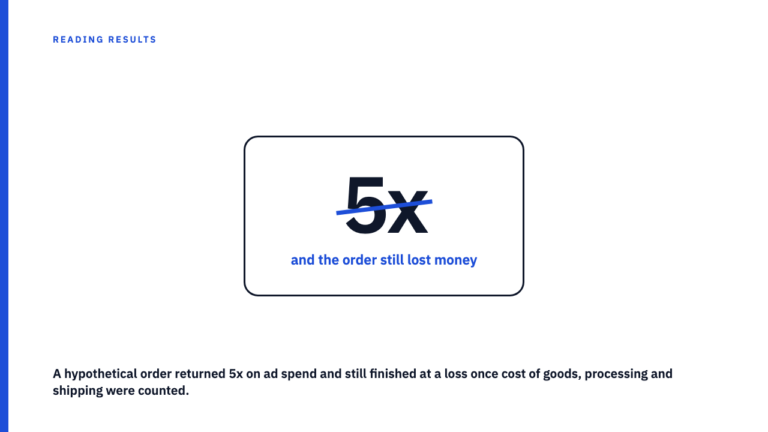
ROAS compares revenue to ad spend, not the cost of goods, fees, or fulfilment. Here is how to check if a reported return multiple left an actual profit.
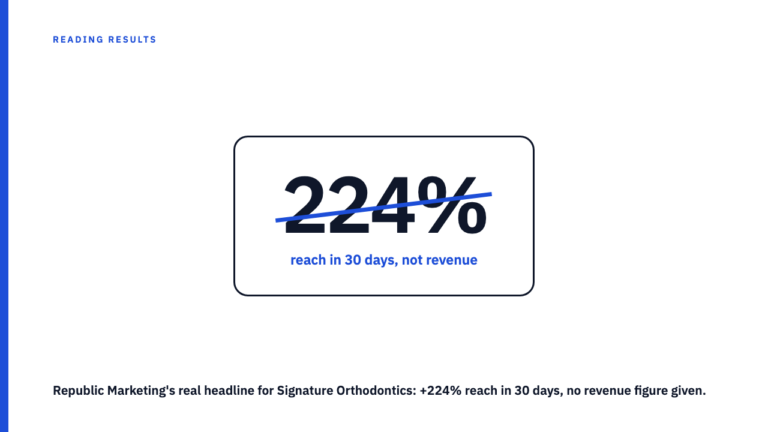
Case studies choose which number leads before you read the campaign. Learn to read that choice and see what a vanity metric headline can’t actually show you.
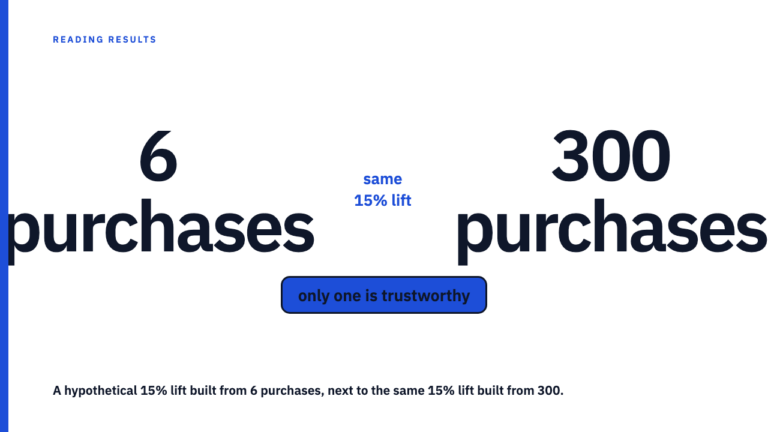
A case study names the winning variant and the percentage lift. Learn what duration, sample volume and repeated peeking tell you before you copy the change.
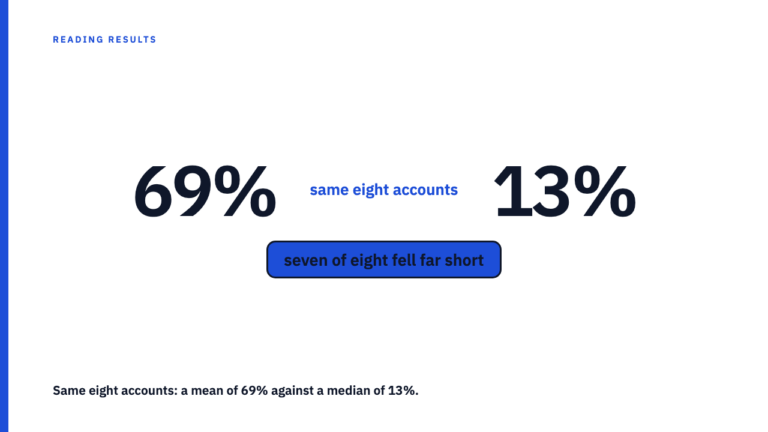
An agency’s average result across a portfolio can be one exceptional account pulling the whole number up. The mean versus median question exposes it fast.
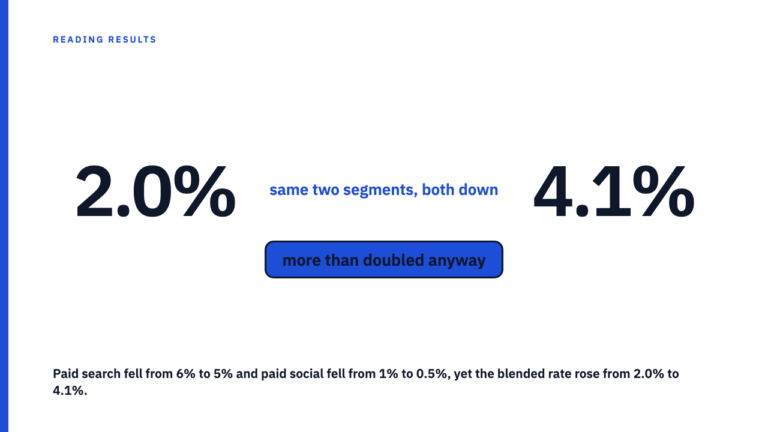
A blended total can rise while every segment behind it gets worse. Walk through a checkable example and the single question that exposes it every time.

A screenshot, a platform export, and a bare prose claim are not the same evidence. Here is how to sort case study numbers by how checkable they really are.