
When the Cited Stat Inside a Case Study Is Years Older Than the Campaign
Readers check when a case study was published. Few check when its footnoted stat was. Here is how to spot a citation that has quietly aged out.
How to interpret social media results and the numbers behind them
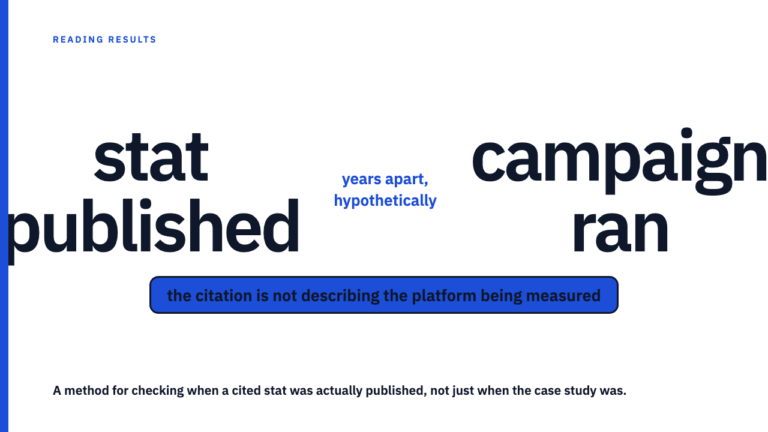
Readers check when a case study was published. Few check when its footnoted stat was. Here is how to spot a citation that has quietly aged out.
Most dashboards show the date range somewhere in the chrome. When a case study crops it out, here is what that specific omission should tell you.
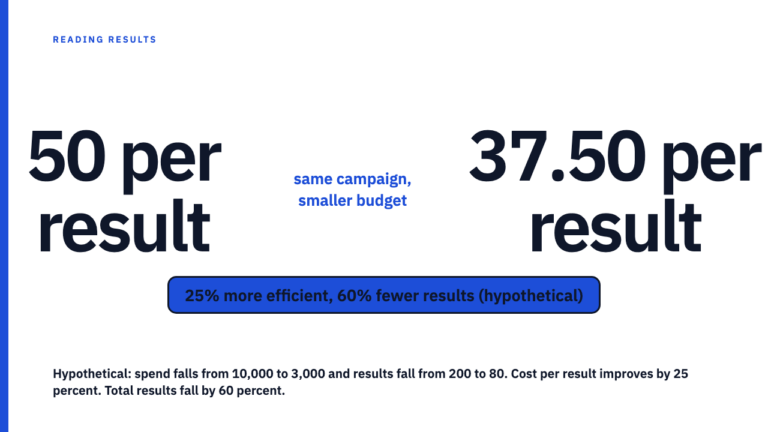
A case study that leads with cost efficiency can hide a shrinking total outcome. Here is how to tell the two claims apart before you believe either.
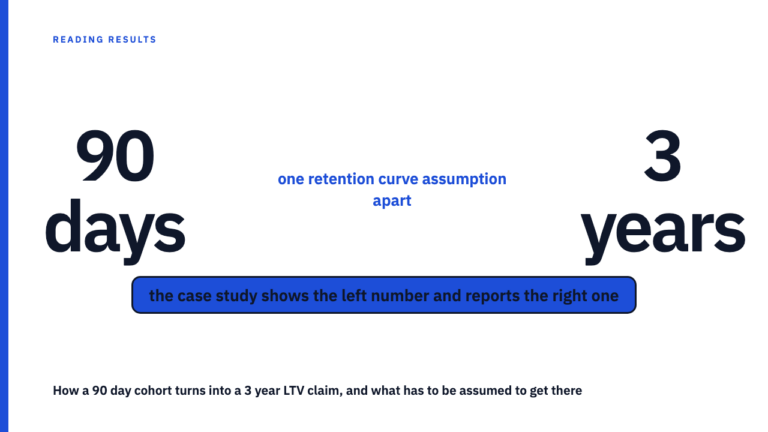
A lifetime value figure quoted from an early cohort rests on a retention curve the case study never shows. Here is what to check before you repeat it.
A case study with one bare percentage and no range is claiming more precision than it has. Here is how to widen the number in your head before you repeat it.
A brand health or success score blends several metrics into one number. The weighting behind that blend is rarely disclosed, and it decides the result.
A headline result that never reappears in later materials is a signal worth checking. Here is the concrete method for looking, and what it can mean.
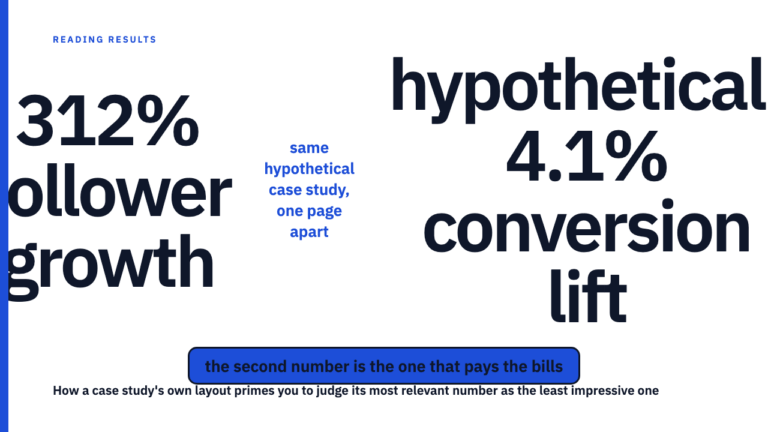
The biggest number on a case study page changes how unimpressive every later number feels. Here is how that ordering effect works, and how to read around it.
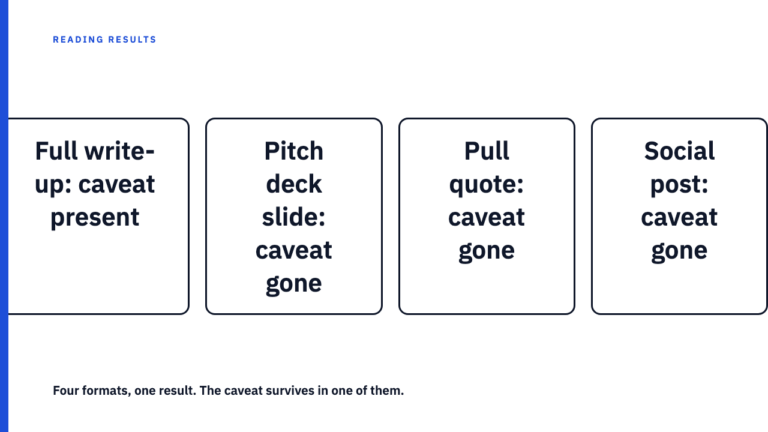
A footnote in a case study rarely survives being turned into a slide, a quote, or a social post. Here is exactly where it drops out, and why it happens in that order.
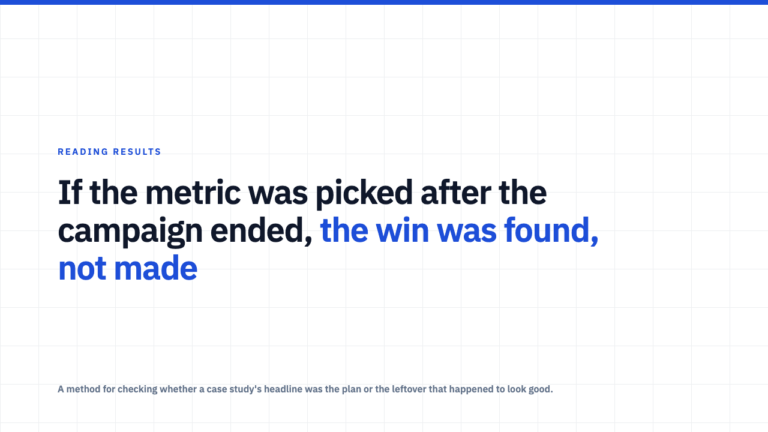
A pre-committed goal and a post-hoc headline are not the same evidence. Here is how to check which one a case study is actually showing you.