
A Case Study Screenshot Is Not the Same Evidence as a Dashboard
A screenshot in a PDF has already had the date range and comparison locked. Here is what a static image can never show you, no matter how honest the number is.
How to interpret social media results and the numbers behind them
A screenshot in a PDF has already had the date range and comparison locked. Here is what a static image can never show you, no matter how honest the number is.
Before you weigh a case study a sales rep sent you, know how it got picked. It was selected after the fact to answer your specific doubt.
A case study names one winning variant out of how many tried. The untested count is the missing number that decides what the win actually means.
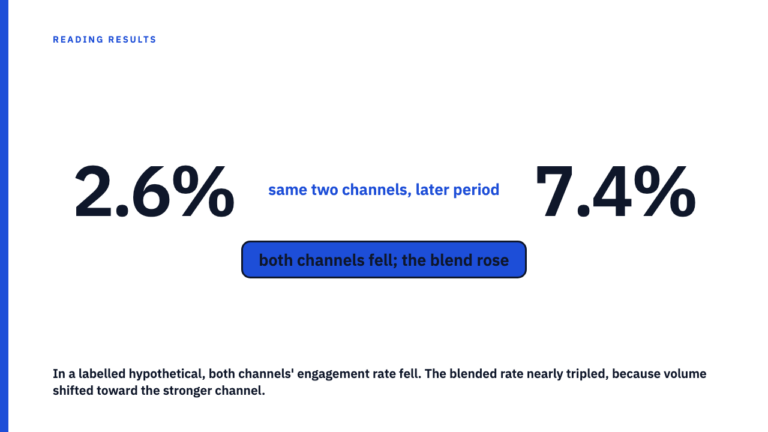
A case study’s overall number and its segment table can point in opposite directions at once. Here is why that is not a red flag, and how to read it.
A before and after case study assumes the platform held still. When it changed distribution mid campaign, part of the lift may belong to the platform.
A case study lists organic reach and paid reach separately. Adding them overstates unique people reached, because the same person can be counted twice.
A SaaS case study says churn dropped. Dropped by which definition? Logo, revenue and net revenue retention can move in different directions at once.
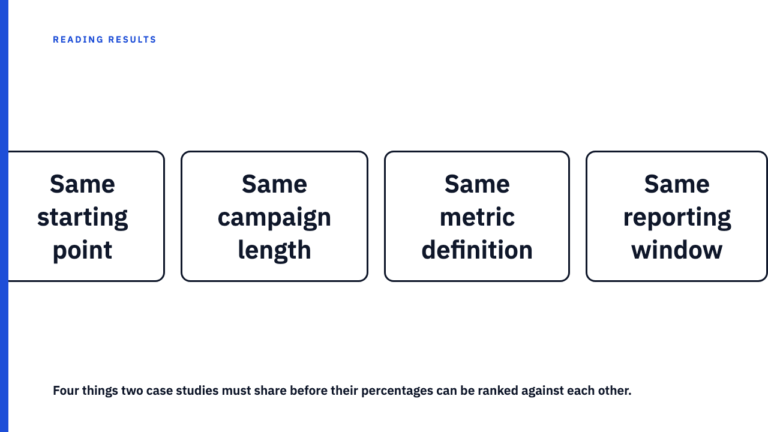
A bigger percentage in one case study doesn’t beat a smaller one next to it until the baselines, windows, and metric definitions actually match.
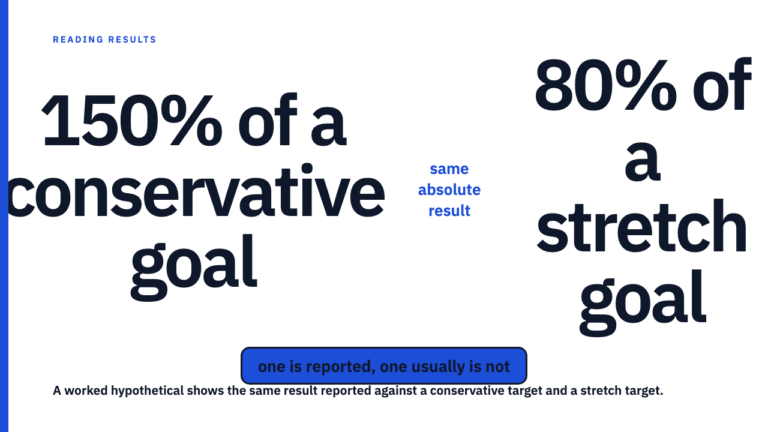
A results claim measured against a goal only means what the goal was. Here is how to check whether the target was ambitious or set low.
Ad platforms can count an impression before it ever scrolls into view. Here is how to tell whether a case study’s impression total means anyone saw it.